
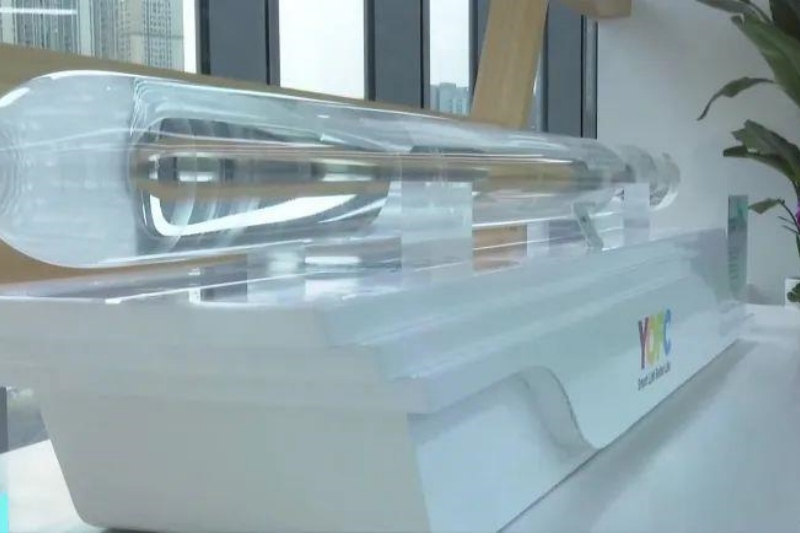
goho nt'ot'e deposición producen kasu̲ ga̲tho ya preformas sílice jar ar ximha̲i: MCVD, PCVD, OVD ne VAD. hingi ya goho marcas competidores ar xkagentho ar. Kadu 'na jar aterriza̲ ja 'nar lugar diferente dige ar precisión, rendimiento ne costo, nja'bu da ár nt'ot'e jár xu̲tha ár preform nu'bu johya nu'bu da xingu ya fibra gí tsa̲ da dibujar ne Temu̲ njut'i ir vidrio ya kilómetro. Nuna ar guía gi hye̲ki ar goho, gem'bu̲ bí entrega 'nar matriz nt'ent'i ne 'nar Nthuts'i auditoría proveedores. Lea ar ndui japi pa ya fundamentos, Ar ñoho japi nu'bu̲ gí 'bu̲i especificando wa fuente.
'bu̲ 'be̲tho ya goho ya acrónimos: preform production is two jobs, not one
Most sourcing conversations go sideways here. A buyer asks “is your preform VAD or OVD?” and gets an answer that sounds clear but explains nothing, because a modern preform is built in two separate stages that often use two different methods.
Bi thogi 1 — the core rod. This piece carries the fiber core plus part of the inner cladding, and it sets your optical specifications: atenuación, dispersión, cutoff wavelength, refractive index profile. VAD and OVD dominate standard singlemode core rods. PCVD owns complex multimode profiles.
Bi thogi 2 — the overcladding. Manufacturers build glass around that core rod until the preform reaches final diameter. This layer barely touches optical performance. It drives dimensions, yield per unit, and a large share of unit cost.
Bí 'bu̲hu̲ bí nja'bu̲ bí “we use VAD” is only half an answer. You need both halves before you can compare two quotes, and the overcladding half is where suppliers differ most. Nuestro breakdown of what a preform actually is covers the structure in more depth if you want the fundamentals first.
Fiber optic preform manufacturing methods at a glance
| MCVD | PCVD | OVD | a | |
| Deposition location | Inside tube | Inside tube | Outside, radial | Outside, axial |
| Heat / energy source | Oxy-hydrogen flame | Microwave plasma, ~1000°C | Flame hydrolysis | Flame hydrolysis |
| 'Rini | Bell Labs, 1974 | Philips, 1975 | Corning, 1970 | NTT, 1977 |
| RI profile control | Precise | Highest — thousands of layers | Xi hño | Hardest to fine-tune |
| Deposition rate | Very low | Moderate, improving | Hñets'i | Hñets'i, supports continuous growth |
| Max preform size | Limited by tube | Limited by tube | Very large | Very large |
| Center hole | Collapsed | Collapsed | Formed, then closed | None by design |
| Cost per km of fiber | Highest | Mid-to-high | Lowest tier | Lowest tier |
| Best fit | Specialty: EDFA, BÍ, rad-hard | OM3/OM4/OM5, specialty profiles | Singlemode cores + overcladding | Standard and ultra-low-loss singlemode |
| Weak spot | No volume, no large preforms | Hingi ar tsa̲ da coincidir ko VAD yá OVD costo jar G.652 | pico ar dehe histórico, nu'bya resuelto | perfiles complejos |
Lea ar tabla komongu 'nar curva intercambio, hingi 'nar clasificación. nt'ot'e interior — tubo ta̲i precisión perfil ne gut'i jar rendimiento. nt'ot'e tubo exterior ta̲i escala ne gut'i jar flexibilidad ar perfil.
1. MCVD: mäs xi hño pa ar precisión, hingi nzäm'bu̲ volumen
Bell Labs MCVD construido en 1974. 'nar llama oxi-hidrógeno calienta exterior 'nar tubo sílice mextha pureza Gem'bu̲ ya gases reactivos oxidan mbo nä'ä, capa ya capa. 'nar pa termina ar deposición, mar hñets'i pa colapsa ar tubo ja 'nar barra xí núcleo sólido.
ar equipo ar simple ne control índice refracción ar genuinamente za̲. yoho ya límites duros terminaron ár carrera telecomunicaciones: tasa deposición ar extremadamente xí hñets'i'i, ne tamaño físico tubo sílice limita nä'ä dätä 'nar preforma to gu̲ts'i.
japi MCVD komongu obsoleto pa ar producción volumen G.652. Sobrevive, ne prospera, jar vidrio hontho — fibra dopada ko ar erbio pa amplificadores, fibra da polarización mantene, fibra resistente jar radiación pa 'be̲fi nuclear ne espacio. nu'bu̲ 'nar proveedor bí ofrece ar multimodo estándar basado jar MCVD 'nar precio competitivo, pregunte honja, getho ar bojä proceso hingi bí apoyan.
da especificar ar MCVD nu'bu̲: t'ot'e 'nar perfil dopado personalizado jar cantidades modestas ne ya kilómetro costo ar secundario da hyoni ar vidrio exacto nä'ä bí pidió.
2. PCVD: multimodo gama mextha ne perfiles especialidad

Philips introdujo PCVD jar 1975, ne Ntxinä YOFC nu'bya lidera jar ximha̲i nä'ä. Deposición Tobe ocurre mbo 'nar tubo sílice, pe microondas generan plasma en lugar de 'nar llama calentando Jot'i ndezu̲ ar exterior. Depósitos vidrio Hmunts'i jar aproximadamente 1000° C — xí hñets'i, Komo nuya procesos ma.
A. r, which gives engineers micron-level command of the refractive index profile. p, r. OM3, e.
c. i, s.
i: �, �, n.
3. OVD: why scale and overcladding matter
Corning OVD inventado jar 1970, g. SiCl₄ and dopant gases react in an oxy-hydrogen flame, and the resulting silica powder deposits radially onto a rotating target rod.

What you get first is a porous soot boule, not glass. Operators pull out the target rod, then dehydrate and sinter the boule in a chlorine atmosphere at high temperature. That step closes the center hole and drives out water, leaving a transparent solid rod.
The early knock on OVD was water peak attenuation at 1383nm, traced to that center hole. The industry solved it — Corning’s SMF-28e line settled the argument years ago. If a competitor still cites center-hole water peak as a reason to avoid OVD, they are quoting 1990s literature.
OVD’s real position today is dual. It makes singlemode core rods, and it is the dominant overcladding technology worldwide, because high deposition rate plus very large preforms plus low cost is exactly what an overcladding step needs. Leading plants have also swapped SiCl₄ for chlorine-free siloxanes like OMCTS (D4) in the overcladding stage, cutting both cost and environmental load.
You should specify OVD when: you want the lowest-cost route to large standard singlemode preforms, or you are evaluating who does your overcladding — where OVD is the default answer at scale.

4. a: mass production and low attenuation
Japón s NTT desarrollado VAD jar 1977. It also runs on flame hydrolysis, but the geometry differs in a way that matters: the soot boule grows vertically along its own axis, from the bottom up, with no target rod involved.
Modern VAD splits deposition and consolidation into two machines — deposit the porous boule, then transfer it to a dedicated furnace for dehydration and sintering.

No target rod means no center hole to close. Internal purity comes out very high, which is why VAD is the method of choice for ultra-low-loss fiber. Axial growth also lends itself to continuous production rather than batch cycles. ZTT, Hengtong and Futong run VAD for the overwhelming majority of their singlemode core rods.
The catch is profile control. Shaping a complex refractive index profile axially is difficult, so VAD is a poor fit for graded-index multimode.
You should specify VAD when: you are producing standard or ultra-low-loss singlemode at volume and want the purest core glass per unit cost.

The decision matrix: parameter × application × buyer type
| Your situation | Core rod method | Overcladding | What actually governs your decision |
| Standard G.652.D singlemode, high volume | VAD or OVD | OVD (or RIC, see below) | Cost per km and yield per preform |
| Ultra-low-loss / long-haul, G.654.E | a | OVD | Core purity, OH control, attenuation margin |
| OM3 / OM4 / OM5 multimode | PCVD | OVD or RIC | RI profile fidelity, bandwidth pass rate |
| Specialty: EDFA, BÍ, rad-hard | MCVD | Application-specific | Dopant control, small-batch flexibility |
| New plant, moderate planned capacity | VAD or PCVD | RIC is legitimate here | Capex per line, geometric consistency, time to first fiber |
| Distribuidor / trader qualifying a source | Ask, do not assume | Ask specifically | Batch-to-batch consistency, documented test data |
One line to carry away: the core rod method follows your fiber type; the overcladding method follows your cost structure and plant scale. Buyers who conflate the two end up comparing quotes that were never comparable.
From preform to fiber: Yogo'ä nt'ets'i nt'ot'e compuestos aguas abajo

'nar preform hingi ge ar producto. Ge ar entrada 'nar he̲ts'u̲ngú dibujo, Ne ar he̲ts'u̲ngú amplifica kadu̲ 'nar hmä da tomaste corriente.
'nar ho̲ntho Nar dätä hño preform rinde miles kilómetros fibra continua, Nja'bu̲ nä'ä mäs dätä longitud dibujable ya ar xe̲ni ir bo̲ni menos cambios, Menos tiempo inactividad he̲ts'u̲ngú, Ne mäs xi hño utilización ár activo mäs hmädi. Error geométrico hingi promedia nu'bu fuera 'nehe — ar fibra dibujada mantiene ar nthe exacta núcleo revestimiento ne perfil índice refracción ar preforma, Escalado abajo da 125μm. error concentricidad da aceptó ar preform tso̲ho̲ intacto ja ya kilómetro da dibuja, Ne bí encontrará ma 'nagi komongu ar pérdida empalme jar hwähi.
Nuestro End-to-end guía ar fabricación Gi 'yo̲t'e ar cadena nxo̲ge precursores crudos a través de ja̲t'i, coating and testing if you need the downstream picture.
Bringing it together
Match the core rod method to the fiber you intend to sell:
- VAD or OVD for standard singlemode,
- VAD for ultra-low-loss,
- PCVD for graded-index multimode,
- MCVD for specialty doped glass.
Choose the overcladding route on cost structure and plant scale rather than on which method sounds most current. Then verify with measured data — attenuation, OH peak, concentricity, profile tolerance — because those numbers, not the acronym, tell you what you are buying.
Fibconet supplies optical fiber preforms alongside draw towers for manufacturers and new plant investors building or expanding a fiber line. If that is your situation, review our Optical Fiber Preform Equipment Factory Supply page for process details and specifications.


