
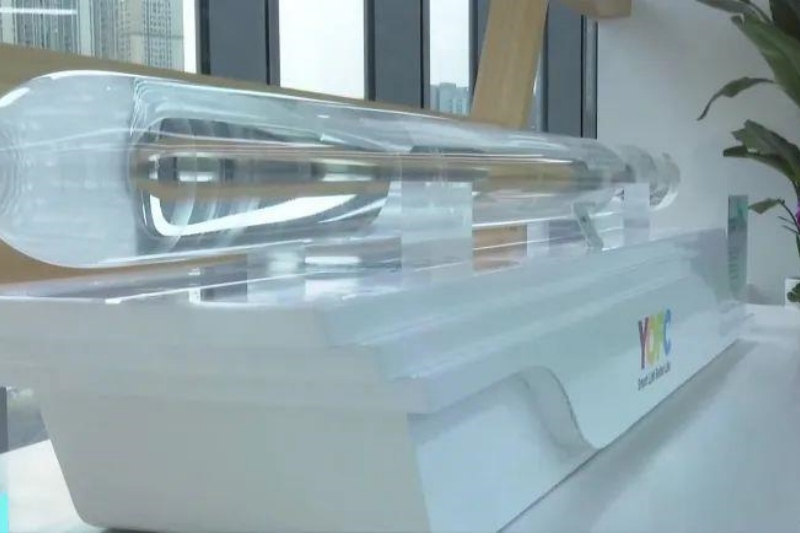
Four deposition methods produce almost every silica preform in the world: MCVD, PCVD, OVD and VAD. They are not four competing brands of the same thing. Each one lands in a different place on precision, throughput and cost, so the method behind your preform quietly decides which fiber types you can draw and what your glass costs per kilometer. This guide compares the four, then hands you a decision matrix and a supplier audit list. Read the first half for the fundamentals, the second half if you are specifying or sourcing.
Before the four acronyms: preform production is two jobs, not one
Most sourcing conversations go sideways here. A buyer asks “is your preform VAD or OVD?” and gets an answer that sounds clear but explains nothing, because a modern preform is built in two separate stages that often use two different methods.
Kauj Ruam 1 — the core rod. This piece carries the fiber core plus part of the inner cladding, and it sets your optical specifications: attenuation, dispersion, cutoff wavelength, refractive index profile. VAD and OVD dominate standard singlemode core rods. PCVD owns complex multimode profiles.
Kauj Ruam 2 — the overcladding. Manufacturers build glass around that core rod until the preform reaches final diameter. This layer barely touches optical performance. It drives dimensions, yield per unit, and a large share of unit cost.
Li ntawd, yog li “we use VAD” is only half an answer. You need both halves before you can compare two quotes, and the overcladding half is where suppliers differ most. Peb breakdown of what a preform actually is covers the structure in more depth if you want the fundamentals first.
Fiber optic preform manufacturing methods at a glance
| MCVD | PCVD | OVD | VAD | |
| Deposition location | Inside tube | Inside tube | Outside, radial | Outside, axial |
| Heat / energy source | Oxy-hydrogen flame | Microwave plasma, ~1000°C | Flame hydrolysis | Flame hydrolysis |
| keeb kwm | Bell Labs, 1974 | Philips, 1975 | pob kws, 1970 | NTT, 1977 |
| RI profile control | Precise | Highest — thousands of layers | Zoo | Hardest to fine-tune |
| Deposition rate | Very low | Moderate, improving | Loj | Loj, supports continuous growth |
| Max preform size | Limited by tube | Limited by tube | Very large | Very large |
| Center hole | Collapsed | Collapsed | Formed, then closed | None by design |
| Cost per km of fiber | Siab tshaj | Mid-to-high | Lowest tier | Lowest tier |
| Best fit | Specialty: EDFA, PM, rad-hard | OM3/OM4/OM5, specialty profiles | Singlemode cores + overcladding | Standard and ultra-low-loss singlemode |
| Weak spot | No volume, no large preforms | Cannot match VAD/OVD cost on G.652 | Historic water peak, now solved | Complex profiles |
Read the table as a trade-off curve, tsis muaj qib. Txoj kev hauv raj sab hauv muab qhov tseem ceeb rau qhov tseeb ntawm profile thiab tso tseg kev ua haujlwm. Txoj kev raj sab nraud muab qhov tseem ceeb rau qhov loj thiab kev hloov tau ntawm profile.
1. MCVD: zoo tshaj rau kev raug, tsis yog ib txwm zoo tshaj plaws rau ntim
Bell Labs MCVD-tsim 1974. Ib qho hluav taws oxy-hydrogen kub sab nraud ntawm ib lub raj silica huv siab thaum cov pa reactant oxidize sab hauv, txheej txheej. Thaum deposition tiav, kub siab ua rau lub raj tawg mus ua ib lub core rod.
Cov cuab yeej yooj yim thiab kev tswj refractive index zoo tiag tiag. Ob qho kev txwv nruj tau xaus nws txoj haujlwm xov tooj: deposition rate qis heev, thiab qhov loj ntawm silica raj txwv qhov loj ntawm qhov preform koj tuaj yeem tsim.
Saib MCVD ua laus rau G.652 ntau. Nws ciaj sia, thiab loj hlob, hauv iav tshwj xeeb — erbium-doped fiber rau amplifiers, polarization-khaws fiber, radiation-resistant fiber for nuclear and space work. If a supplier offers you MCVD-based standard singlemode at a competitive price, ask how, because the process economics do not support it.
You should specify MCVD when: you need a custom doped profile in modest quantities and per-kilometer cost is secondary to getting the exact glass you asked for.
2. PCVD: high-end multimode and specialty profiles

Philips introduced PCVD in 1975, and China’s YOFC now leads the world in it. Deposition still happens inside a silica tube, but microwaves generate plasma instead of a flame heating the wall from outside. Glass deposits directly at roughly 1000°C — low, as these processes go.
Precision is the whole argument for PCVD. The process lays down thousands of thin layers, uas muab cov kws engineers tswj hwm micron ntawm refractive index profile. Qhov ntawd tseem ceeb heev rau graded-index multimode fiber, qhov twg bandwidth nyob ntawm seb qhov tseeb ntawm parabolic profile raug tsim tawm. OM3, OM4 thiab OM5 yog PCVD lub tsev.
Cov microwave muaj zog dua tau nce PCVD deposition rates ntau. Nws tseem kim dua VAD thiab OVD rau singlemode fiber qauv, thiab tsis muaj kev kho txheej txheem twg hloov tau qhov ntawd.
Koj yuav tsum qhia PCVD thaum twg: koj tab tom tsim graded-index multimode lossis ib qho profile tshwj xeeb uas bandwidth thiab profile raug, tsis yog tus nqi iav, txiav txim seb fiber puas ua raws li cov cai.
3. OVD: vim li cas scale thiab overcladding tseem ceeb
pob kws invented OVD hauv 1970, thiab nws tseem yog txoj kev synthetic siv dav tshaj plaws hauv ntiaj teb. SiCl₄ thiab dopant gases ua haujlwm hauv hluav taws oxy-hydrogen, and the resulting silica powder deposits radially onto a rotating target rod.

What you get first is a porous soot boule, not glass. Operators pull out the target rod, then dehydrate and sinter the boule in a chlorine atmosphere at high temperature. That step closes the center hole and drives out water, leaving a transparent solid rod.
The early knock on OVD was water peak attenuation at 1383nm, traced to that center hole. The industry solved it — Corning’s SMF-28e line settled the argument years ago. If a competitor still cites center-hole water peak as a reason to avoid OVD, they are quoting 1990s literature.
OVD’s real position today is dual. It makes singlemode core rods, and it is the dominant overcladding technology worldwide, vim deposition rate siab ntxiv rau preform loj heev thiab tus nqi qis yog yam uas txheej txheej txheej txheej xav tau. Cov chaw ua haujlwm loj kuj tau hloov SiCl₄ mus rau siloxanes tsis muaj chlorine xws li OMCTS (D4) hauv theem txheej, txo nqi thiab kev thauj khoom ib puag ncig.
Koj yuav tsum qhia OVD thaum: koj xav tau txoj kev pheej yig tshaj mus rau cov qauv loj singlemode preforms, lossis koj tab tom ntsuam xyuas leej twg ua txheej txheej txheej — qhov twg OVD yog qhov kev xaiv default thaum loj.

4. VAD: kev tsim ntau thiab kev txo qis
Nyij Pooj NTT VAD tau tsim hauv 1977. Nws kuj khiav ntawm flame hydrolysis, tab sis geometry txawv hauv txoj kev uas tseem ceeb: soot boule loj hlob ntsug raws nws tus kheej axis, los ntawm qab mus rau saum, tsis muaj lub hom phiaj rod.
Modern VAD splits deposition and consolidation into two machines — deposit the porous boule, then transfer it to a dedicated furnace for dehydration and sintering.

No target rod means no center hole to close. Internal purity comes out very high, which is why VAD is the method of choice for ultra-low-loss fiber. Axial growth also lends itself to continuous production rather than batch cycles. ZTT, Hengtong and Futong run VAD for the overwhelming majority of their singlemode core rods.
The catch is profile control. Shaping a complex refractive index profile axially is difficult, so VAD is a poor fit for graded-index multimode.
You should specify VAD when: you are producing standard or ultra-low-loss singlemode at volume and want the purest core glass per unit cost.

Daim ntawv txiav txim siab: parameter × daim ntawv thov × hom neeg yuav
| Koj qhov xwm txheej | Core rod method | Overcladding | Dab tsi tiag tiag tswj koj qhov kev txiav txim |
| Standard G.652.D singlemode, high volume | VAD lossis OVD | OVD (los yog RIC, saib hauv qab no) | Nqi ib km thiab yield per preform |
| Ultra-low-loss / long-haul, G.654.E | VAD | OVD | Core purity, OH control, attenuation margin |
| OM3 / OM4 / OM5 multimode | PCVD | OVD lossis RIC | RI profile fidelity, bandwidth pass rate |
| Specialty: EDFA, PM, rad-hard | MCVD | Application-specific | Dopant tswj, kev hloov tau yooj yim ntawm batch me |
| Lub Hoobkas tshiab, peev xwm npaj nruab nrab | VAD lossis PCVD | RIC yog raug cai ntawm no | Capex ib kab, kev sib haum xeeb geometry, sijhawm mus rau thawj fiber |
| distributor / tus neeg lag luam txheeb xyuas qhov chaw | Nug, tsis txhob xav tias | Nug tshwj xeeb | Kev sib haum xeeb ntawm batch mus rau batch, cov ntaub ntawv kuaj tau sau tseg |
Ib kab nqa mus: txoj kev core rod ua raws koj hom fiber; txoj kev npog ntxiv raws li koj tus nqi thiab qhov loj ntawm lub hoobkas. C.
o: v

Preform tsis yog khoom. n, e.
e, g, tsawg dua lub sijhawm nres ntawm lub tsev, y. u, a. v, thiab koj yuav ntsib nws dua raws li kev poob splice hauv thaj chaw.
Peb phau ntawv qhia tsim khoom tag nrho taug kev tag nrho cov saw los ntawm raw precursors mus rau kev kos duab, txheej thiab kuaj yog tias koj xav tau daim duab tom qab.
Ua ke ua ke
Ua kom txoj kev core rod phim rau fiber uas koj xav muag:
- VAD lossis OVD rau singlemode qauv,
- VAD rau ultra-low-loss,
- PCVD rau graded-index multimode,
- MCVD rau iav doped tshwj xeeb.
Xaiv txoj kev npog txheej raws li tus nqi thiab qib hoobkas es tsis yog raws txoj kev uas zoo tshaj plaws. Tom qab ntawd xyuas nrog cov ntaub ntawv ntsuas — attenuation, OH peak, concentricity, profile tolerance — vim cov lej ntawd, tsis yog acronym, qhia koj tias koj yuav dab tsi.
Fibconet muab optical fiber preforms nrog draw towers rau cov tuam txhab tsim khoom thiab cov neeg nqis peev tshiab uas tab tom tsim lossis nthuav kab fiber. Yog tias qhov ntawd yog koj qhov xwm txheej, tshuaj xyuas peb Optical Fiber Preform Equipment Factory Supply nplooj ntawv rau cov ntsiab lus txheej txheem thiab cov lus qhia tshwj xeeb.


