
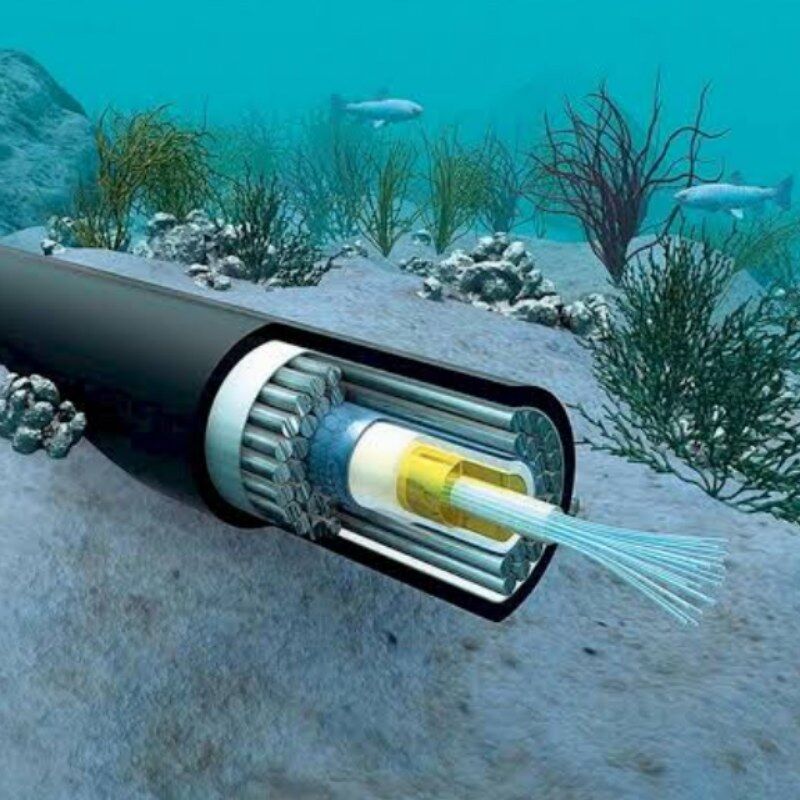
Yakagadzirirwa kudzika-mvura yegungwa uye pakati-zvitsuwa kutumirwa uko kuchengetedzwa kwezvombo kubva panjodzi dzemugungwa uye mitoro yekuisa ndiyo inonyanya kudiwa..
Mamiriro ezvinhu anoshanda: Island interconnection, Coastal communication backbone, offshore bay crossings, pedyo-mahombekombe data links pakadzika kusvika 250 m.
| Parameter | Value |
|---|---|
| Hudzamu hwekutumirwa kweMax | 250 m (kunyanya ≤100 m) |
| Max fiber count | 288 cores |
| Kureba kwenguva refu mutoro | 4 kN |
| Mutoro wenguva pfupi (kuisirwa) | 10 kN |
| Fiber type | G.652D |
| Outer sheath | Marine-giredhi yakagadziridzwa HDPE |
| Waya yezvombo | Kupisa-dhibha maratisi yakaderera-kabhoni yakatenderera waya yesimbi |
| Mipimo inoshanda | GB/T 18480 · IEC 60794 · ITU-T G.976 · GJB 4489 |
| Warranty | 15 makore |
Kune nzira dzakadzika-mugungwa uye kureba-kuyambuka-gungwa spans uko pasina anodzokorora zviteshi akaisirwa pamwe netambo. Inokodzera zvitsuwa-kune-mainland zvinongedzo, ocean observation networks, uye offshore simba mapuratifomu mumvura yakadzika.
Mamiriro ezvinhu anoshanda: Deep-sea inter-island links, offshore mhepo/oiri-gasi papuratifomu kutaurirana, gungwa rekuona zvivakwa, pedyo-kumahombekombe uye pfupi-chinhambwe masisitimu anoda hapana anodzokorora mumutsara.
| Parameter | Value |
|---|---|
| Zita rekunze dhayamita | 13.0 mm |
| Hudzamu hwekutumirwa kweMax | 8,000 m |
| Max fiber count | 32 cores (kumusoro 32 inoda kugadzirwa patsva) |
| Yenguva pfupi yakatarwa tensile mutoro (NTTS/CBL) | NTTS 50 kN (kuisirwa) CBL65kN |
| Nominal working tensile load (NOTS) | 30 kN |
| Permanent tensile load (NPTS) | 20 kN |
| Minimum bending radius (no tension) | 1 m |
| Impact | 60 J |
| Kupwanya kuramba | 15 kN/100mm |
| Insulation resistance | ≥10 GΩ·km |
| DC kuramba pa4°C | ≤1.5 Ω/km |
| Fiber mhando dziripo | G.652.D · G.654 · G.655 |
| Kushanda tembiricha | -10°C kusvika +40°C |
| Kuiswa tembiricha | -15°C kusvika +45°C |
| Kuchengetedza tembiricha | -30°C kusvika +60°C |
| Upenyu hwekugadzira | ≥25 makore |
| Mipimo inoshanda | GB/T 18480 · GBB 4489 · IEC 60794 · ITU-T G.976 |
| Warranty | 15 makore |
Cable chimiro (kubva pakati kuenda kunze):
Faibha dzemaziso → Fiber jelly → Stainless simbi chubhu → Waya yemukati yezvombo → Komisheni inovharira mvura → chubhu yemhangura → Polyethylene insulation

Kugadzirisa tambo dzepasi pemvura dzinowanzoita 10–50× kupfuura basa rimwechete panyika. Nenguva iyo kukundikana kunowanikwa, chikepe chekugadzirisa chakaiswa, uye tambo yakapora ndokuiswazve, mari yetambo yepakutanga chikamu chiduku chemari yose. Ndicho chikonzero zvinhu zvinobata pasi pemvura yegungwa, chloride kuratidzwa, uye marine microbiological chiitiko haisi yechipiri fungidziro - ndiyo njodzi yeprojekiti.
Hezvino izvo zvakasiyana pakuvakwa kwetambo idzi:
Standard HDPE inoshingirira kumakemikari akawanda, asi kuratidzwa kwenguva refu mumvura yegungwa chloride ions uye marine microorganisms zvinosvibisa zvakajairwa maumbirwo nekufamba kwenguva.. Mushonga weHDPE unoshandiswa mumatambo aya unogadziridzwa zvakanangana nenzvimbo dzemugungwa, ine anti-chloride ion uye anti-marine microorganism additives inosanganisirwa mu base resin..
Kusimbiswa kwakazvimirira: hapana kutsemuka kana pulverization mushure 3,000 maawa ekusarerekera munyu kupfapfaidza kuyedzwa.
Shanduro dzemvura isina kudzika dzinoshandisa hot-dip galvanized low-carbon round steel waya. Tambo dzemvura yakadzika dzinoshandisa high-carbon, high-simba raundi simbi waya ine zinc-aluminium alloy coating. Iyo zinc-aluminium alloy ine yakanyanya kusimba kunamatira kune substrate yesimbi pane yakajairwa zinc coating chete.. Kunyangwe iyo bhachi rekunze rinotsigira diki abrasion uye mvura yegungwa inosangana neiyo nhumbi dzehondo, corrosion rate inodzikiswa zvakanyanya kana ichienzaniswa neyakajairika galvanized waya.
Iwo machubhu akasununguka akazadzwa ne hydrolysis-resistant marine-grade fiber jelly. Yakasanganiswa nestainless simbi chubhu uye mvura-yekuvharira musanganiswa muBYUOC-1 LW chimiro, this creates a complete longitudinal water barrier across the cable cross-section — preventing seawater from tracking along the cable interior even if the outer jacket is breached at a point.
Submarine cable performance depends not just on material selection but on how consistently the manufacturing process executes. Two parameters are directly tied to long-term reliability:
Fiber excess length tolerance: ≤±0.02 mm
Controlled throughout the stranding process using imported closed-loop bidirectional SZ stranding machines. Excess length directly affects how the fiber responds to tension and temperature cycling over the cable’s service life.
Outer sheath wall thickness tolerance: ±0.03 mm
Achieved through a dual-layer co-extrusion bonded jacket system with inline laser thickness gauges and real-time outer diameter monitors. The industry average tolerance is ±0.1 mm. Tighter wall thickness control means more consistent bonding between the jacket and steel armor — eliminating gaps that could allow longitudinal seawater permeation.
Kugadzirwa kugona: 4 dedicated high-speed production lines for underwater cables, operating continuously. Monthly output up to 10,000 core-kilometers. Standard specifications (2/4/8/12/24/48 cores) held in stock; in-stock orders ship the same day.
The right laying method depends on seabed conditions and the operating environment. Four approaches are applicable:
| Nzira | Zvakanakisa zve |
|---|---|
| Submarine trench burial | Flat seabeds with silt or sand — cable is plowed or jetted into the seabed for protection from anchors and trawling |
| Seabed surface laying | Calm water with low vessel traffic and minimal seabed disturbance risk |
| Conduit/casing protection | Rocky seabeds, reef environments, or any area with sharp substrate that could abrade the cable jacket |
| Underwater suspension | Near-shore spanning applications, such as crossing a bay where trench burial is impractical |
If you are uncertain which method applies to your route, our technical consultants can review your seabed survey data and provide a recommendation.
These cables are designed in compliance with the following standards:
Kana purojekiti yako ichida zvinyorwa zvekuteerera, tizivise iwo chaiwo chiyero kana wasvika. Tinogona kupa zvitupa zvakakodzera kuti zvionekwe.
