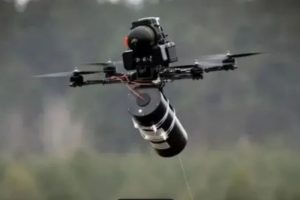
A drone fiber link fails in flight, and the first question is almost always about the fiber grade. Was it really G.657.A2? Did the supplier ship something cheaper?
That question rarely leads anywhere, because the bend grade governs how much light survives a tight bend. It says nothing about whether the glass survives being pulled off a spool at speed. Payout breakage is a mechanical event, and the specifications that predict it are usually missing from the conversation entirely.
This guide covers where the fiber actually fails, how to read a tensile strength number without being misled by it, why reel construction matters as much as the fiber, and what to write into a specification so the next batch can be judged against something concrete.
séeba'an núukik: The Three Numbers That Decide Whether Your Fiber Survives
| Meyaj ku | Ba'ax ku ya'aliktech | Typical value for FPV-grade bare fiber |
|---|---|---|
| Proof test level | The screening stress every metre passed during manufacture | ~100 kpsi (≈ 8.5–9.2 N on 125 μm revestimiento) |
| Resistencia le tracción | The load at which the fiber actually breaks | ~50 N typical; 55–60 N for enhanced versions |
| Payout tension | The load the reel imposes while unwinding at flight speed | Not published by anyone — you have to test it |
The third number is the one that ends flights, and it is the one no datasheet contains. It comes from reel construction, winding method and how fast the drone accelerates, not from the fiber specification.
If you read only one thing here: a fiber with excellent tensile strength on a badly wound reel will still break. The reel is not packaging.
Where Drone Fiber Actually Fails
Payout failures fall into four mechanisms. They call for different fixes, and treating them as one problem is why the same failure keeps recurring.
Static break
The fiber is pulled beyond its tensile limit in one event — a snag on an obstacle, an abrupt directional change, a catch on the airframe. Load spikes past the break threshold and the link is gone instantly.
This is the mechanism people picture, and it is the least common of the four.
Dynamic payout break
Tension builds while the fiber unwinds. A reel that releases unevenly, a layer that catches on the one beneath it, an acceleration faster than the pack can feed — each drives tension upward, and glass fails at whatever load it reaches, which can be well below its rated strength if a defect happens to sit at that point.
This is the dominant failure mode in flight, and it is governed by the reel far more than by the fiber.
Abrasion and friction damage
The fiber rubs against the reel edge, the housing exit, or itself. The coating wears, the glass surface picks up microscopic damage, and strength drops locally. The break may happen minutes later somewhere that looks unremarkable.
Friction damage is cumulative and invisible, which makes it the hardest mechanism to diagnose after the fact.
Tangling and self-fouling
The fiber loops back on itself, catches the airframe, or forms a knot as it comes off the pack. A knot in optical fiber concentrates stress at a radius far below anything the grade allows, and it breaks there.
Ba'axten “it broke” is almost never a grade problem
Three of these four mechanisms are decided by the reel and by flight profile. The fourth — static break — depends on tensile strength, and tensile strength is not what thebend-insensitive grade describes. A1 and A2 are screened to the same mechanical level and differ in bending optics.
So when a supplier confirms the fiber really is A2 and the breakage continues, that is the expected outcome, not a contradiction. For background on how the tethered architecture works and what it costs you, see our guide to thefiber optic FPV drone.
How to Read a Tensile Strength Number
Here is the practical problem. Two suppliers quote tensile strength. One says 50 N, another says 500 N. The second looks ten times stronger.
Very often it is not stronger at all — it is measuring something else. A tensile figure is meaningless until you know three things about it.
K'áatchi 1: What was tested?
Láaj jo'ochiko'obe' desnuda, tight-buffered fiber and cabled fiber are three different products with three different strengths.
| What is being tested | What carries the load |
|---|---|
| Láaj jo'ochiko'obe' desnuda (245 µm or 200/242 µm coated glass) | The glass itself |
| Tight-buffered fiber | Glass plus buffer layer |
| Cabled fiber | Ti' k'uuch aramida, FRP or steel strength members — the glass carries almost none of it |
A cabled construction can be rated in the hundreds of newtons because aramid yarn carries the load. That number is real for the cable, and irrelevant to bare fiber on a drone reel.
A quick check: if a tensile figure appears alongside words like aramid, miembro u muuk', or reinforced, it is describing a cable. Bare fiber has none of those components. When a bare fiber page quotes a strength that could only come from a reinforced construction, the number and the product do not match.
K'áatchi 2: How was it tested?
Proof test and tensile strength are different measurements, and the gap between them is large enough to look like an error when it is not.
- Prueba de prueba — every metre of fiber is subjected to a defined stress during manufacture. Anything that fails is removed. This is a screening threshold, not a strength rating.
- Resistencia le tracción — the load at which the fiber breaks, suuk u ya'ala'al bey jump'éel distribución Weibull tumen u muuk' le vidrio jach estadística kúuchil jump'éel chéen je'o'.
Le uláak' jaatso' ku t'aan ti' ba'axten ku jela'anil kex seis u téenel.
K'áatchi 3: Ba'ax unidad?
u muuk' le láaj jo'ochiko'obe' ku chíikpajal bey newtones, GPa wa kpsi dependiendo de le hoja de datos, ba'ax ku beetik u yila'al le especificaciones ma' tu páajtal u ke'etel ken ma' leti'obe'. tuláakal le óoxtúulo'obo' ku sutko'ob libremente, tumen le estrés jach u muuk' dividida tumen yo'osal u sección transversal.
Utia'al u estándar 125 μm revestimiento:
Un=pr2=p×(62.5×10⁻⁶)2=1.227×10⁻⁸ m2
Muuk(N)=Estrés(Pa)×Un1 GPa=145 kpsi
Ba'ax ku ts'áaik:
| Estrees | Muuk' ti' 125 μm revestimiento | Lúub |
|---|---|---|
| 0.69 GPa | 8.5 N | 100 KPSI |
| 3.20 GPa | 39.3 N | 464 KPSI |
| 4.00 GPa | 49.1 N | 580 KPSI |
yéetel tu contrario:
| Muuk | Estrees | Lúub |
|---|---|---|
| 9.0 N | 0.73 GPa | 106 KPSI |
| 50 N | 4.07 GPa | 591 KPSI |
| 60 N | 4.89 GPa | 709 KPSI |
Mantenga le yáax constante yéetel je'el sutk'esiko'ob je'el ba'ax especificación u muuk' láaj jo'ochiko'obe' yan wéet.
Ejemplo meyaj: xook jump'éel jaajil ju'unil datos
Ch'aik jump'éel tsoolol le' datos u láaj jo'ochiko'obe' desnudaProof Test ≥ 9.0 N / ≥ 100 kpsi y, tu láak' tu'ux ti' le bak'paach linki abas kaambal, jump'éel figura noj bejo' u ya'ab cientos newtones.
Beet le óoxp'éel k'áat chi'oba':
- What was tested? Le internet ichil prueba prueba jach láaj jo'ochiko'obe' desnuda. jump'éel figura yaan cientos newton ti' 125 μm vidrio ku sutk'esiko'ob ti' decenas u GPa - por encima de u muuk' teórica ti' le sílice. ma' tu páajtal u tsolik u láaj jo'ochiko'obe', bey u táan u tsolik jump'éel construcción reforzada.
- How was it tested? 9.0 N leti' jump'éel umbral u cribado. Le figura ti' le titulo, je'el ba'ax u ti'al, leti' jump'éel kuuch jaatik. jejeláas p'iis.
- Ba'ax unidad? Tu ka'atúulal ti' newtones, bey u le unidades ma' le le discrepancia.
ka'ap'éel figuras ti' jump'éel linki abas kaambal, ku tsolik ka'ap'éel jejeláas yik'áalil. Mix juntúul ti' leti'ob jach necesariamente falso - ba'ale' ma' táan comparables, yéetel chéen juntúul ti' leti'obe' leti' le láaj jo'ochiko'obe' ku bin yóok'ol a carrete.
Beet le je'ela' bey ma' comparar citas yéetel le comparación ku p'áatal ti' páajtal. Ma' a beetik yéetel yaan a yéeyik jump'éel meyaj ku ku tsolik jump'éel cable ma' táan a maan.
Prueba u prueba vs resistencia ti' le tracción
Ba'ax ku beetik le prueba prueba tu realidad
Le prueba prueba tiran tuláakal le longitud láaj jo'ochiko'obe' ti' jump'éel tensión definida ichil le fabricación. U tuukulile' leti' u xu'ulsa'al, ma' calificación: je'el ba'ax ch'aaj jach t'ona'an uti'al u fallar ti' le estrés ku jaatik ti' le fábrica kúuchil ti' u carrete.
Un 100 kpsi prueba prueba tune' garantiza jump'éel lu'umo'. Amal metro kuxa'an 0.69 GPa, táantike' 8.5 N. ma' u k'áat u ya'al u láaj jo'ochiko'obe' ku jaat chéen yóok'ol lelo'.
Ba'axten le ka'ap'éel meyaj ku jela'anil kex seis u téenel
U muuk'il le rotura xíimbal tumen ku kutal ma'alob por encima de le nivel cribado. K láaj jo'ochiko'obe' A2 ku ya'alik ≥ 4.00 GPa at 50 % Weibull probabilidad — yóok'ol49 N — yéetel u tojol típicos tu ba'pach50 N, yéetel versiones mejoradas medidas ti'55–60 N.
Bey u le bak'paach láaj jo'ochiko'obe' legítimamente bisik jump'éel 100 kpsi prueba prueba calificación yéetel juntúul ~ 50 N resistencia ti' le tracción. Le relación jach yan5.9×, yéetel u diseñado ti':
| Ku | Rool | |
|---|---|---|
| Prueba de prueba | ~8.5 N (100 KPSI) | Lu'umo' u cribado - Amal metro máan |
| Resistencia le tracción | ~50 N (4.07 GPa) | Kuuch típica u rotura |
| Mejorada u tracción | 55–60 N | P'iis ti' versiones mejoradas |
U xo'okol le yáax meyaj ku bey u ka'ap'éele' ku beetik u yila'al le láaj jo'ochiko'obe' seis Óoxten asab t'ona'an ti' le yaan. Xook le segunda bey le yáax ku beetik u jump'éel umbral cribado bey jump'éel yilik ka' yaanak ma'alob u rendimiento. Le ka'ap'éel ba'alo'oba' ku chíikpajal regularmente ti' le tsikbalo'ob yóok'ol le maano'.
Ba'ax u k'áat u ya'al le je'ela' uti'al a especificación: k'áatik tu ka'atúulal. Le prueba prueba ku ya'alik ti' le lu'umo' fabricación; u muuk'il le tracción ku ya'alik ti' teech le margen meyaj.
Diseño de carrete: Ba'axten k'a'anan le bobina interna
Le especificación láaj jo'ochiko'obe' establece jump'éel límite superior ti' le ba'ax le enlace je'el u páajtal u sobrevivir. Le carrete ku ch'a'atukult buka'aj ti' le margen ku k'amik tu jaajile'.
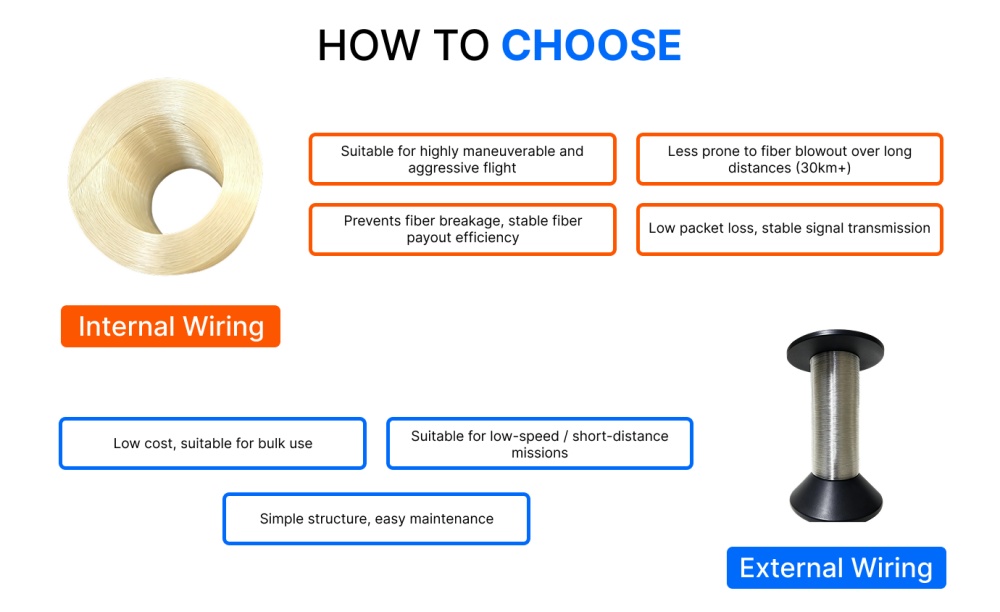
Bobinado interno vs externo
Bobinado externo ku p'atik le láaj jo'ochiko'obe' tu paach u wíinkilal le carreteo', expuesto ti' le vivienda, le marco péepenk'áak'o' yéetel je'el ba'ax le drone cepillos máan. Amal giro expuesto jach jump'éel ch'aaj abrasión potencial.
Enrollamiento interno ku p'áatal le láaj jo'ochiko'obe' ichil le najil ichil u jóok'ol. Le paquete táan protegido ti' le máax ku externo, yéetel le láaj jo'ochiko'obe' ku jóok'ol ti' jump'éel bejil salida controlada kúuchil u peeling jump'éel superficie abierta.
Le mecanismo jach sencillo: menos ti'its Máax ku externos, menos fricción, menos kúuchilo'ob uti'al u ch'a'abal le láaj jo'ochiko'obe' ichil u jóok'ol dinámico. Le je'ela' jach k'a'anan ti' le modo falla ku beetik u le asab vuelos ts'o'oksik temprano - rotura bo'ol dinámica, tu'ux le picos tensión ku taalo'ob ti' le liberación irregular kúuchil ti' je'el ba'ax chéen obstáculo.
Xooko'obo' le carrete yéetel peso
U juuch'il le carrete ku bisik tuláakal le vuelo, bey u compite Jun yéetel le batería yéetel le kuuch útil.
3D-impreso ABS carcasas adaptan ti' le ka'anatako'ob tumen razones asab te'elo' u peso: geometry can be matched to a specific airframe, and revisions do not require new tooling. That makes them well suited to prototyping and to platform-specific builds. Injection moulding becomes more economical at higher volumes, at the cost of tooling lead time and design lock-in.
The engineering point is that reel geometry — barrel diameter, flange spacing, exit path — is a design variable that should be matched to the platform, not accepted as whatever the supplier stocks.
Resin coating and friction
An optional resin layer over the wound pack reduces friction between adjacent turns and adds a measure of protection during handling. It also adds mass.
Whether it is worth the weight depends on the platform. Aggressive acceleration profiles, where inter-layer friction is most likely to spike tension, benefit most. Slow controlled deployment may not need it. Ask your supplier which they recommend for your specific speed profile rather than treating it as a universal upgrade — and note that reducing the coating diameter, which changes both pack density and weight, interacts with this decision.
Payout Speed and the Tension Window
Every reel has a speed range within which the fiber releases cleanly. Below it, slack can accumulate and loop. Above it, tension rises until something fails.
That window is a property of the assembly — fiber, winding pattern, reel geometry and exit path together — which is why no fiber datasheet can tell you what it is. It has to be measured on the actual pack.
How to establish it:
- Run pay-out on the bench across your intended speed range, yéetel le carrete montado bey yaan u beel ti' le péepenk'áak'o'.
- Ilawil le ka'ap'éel firmas falla: vacilación wa sacudida (jump'éel capa ku ch'a'ik) yéetel acumulación slack (ku jóok'sik asab séeba'an ti' le drone ku bin táanil).
- Yanak ti' tu yilaje' le velocidad ti' le ku chíikpajal je'el máaxake'. U techo operativo yaan yáanal leti', yéetel margen.
- Repita ka' je'el ba'ax k'eexpajal ti' le geometría le carrete, método u enrollamiento, metros u recubrimiento wa longitud u láaj jo'ochiko'obe'.
Le aceleración agresiva jach u páajtalil asab común u superar le ventana ti' vuelo. jump'éel perfil ku meyaj ti' jump'éel na'akal constante je'el u páajtal u fallar ti' jump'éel salida rápida, yéetel le jela'anil ma' kun chíikpajal ti' mix jump'éel le' especificación - chéen ti' le banco.
xan k'a'anan ti' leradio u flexión mínimo le paquete ku ts'áaik: jump'éel carrete ma'alob enrollado sostiene le láaj jo'ochiko'obe' naats' u límite flexión utia'al tuláakal le vuelo, ma' chéen tu súutukil u jóok'sa'al.
Largura, Peso yéetel k'iinil vuelo
Reel length is a three-way trade, and optimising any one variable costs you the other two.
- More fiber means longer potential range and a heavier pack.
- A heavier pack means shorter flight time and reduced payload capacity.
- Shorter flight time means less of that theoretical range is reachable.
Beyond a certain length the added fiber cannot be used within the remaining endurance, so the practical answer is to size the reel to your mission radius plus margin, rather than to the maximum the platform can lift.
Coating diameter enters here as well. A reduced coating puts more length on the same reel at lower weight, at the cost of a thinner protective layer and different handling behaviour. Wa le koonolo' vale le pena meentik yaantal yo'osal u le plataforma yéetel u Buka'aj manipulación le láaj jo'ochiko'obe' ku yilik bey ma' vuelo - le características mecánicas u láaj jo'ochiko'obe' reducido-recubrimiento k'a'abéet u solicitadas específicamente kúuchil asumir ti' le hoja datos estándar.
Ba'ax ken a ts'áa ti' a especificación
Óol tuláakal le máasewáalo'obo' u especificaciones láaj jo'ochiko'obe' drone describen le láaj jo'ochiko'obe' yéetel parada, ku p'atik le pak'chaje' ku jets'ik u kuxtal le bo'ol jaatsatako'ob ti' le discreción le proveedor. Le k'iino'oba' líneas ku beetiko'ob jump'éel lote verificable.
Láaj jo'ochiko'obe
- Grado u láaj jo'ochiko'obe' yéetel le categoría ITU-T ku beetik yéetel
- Metros le recubrimiento, ku ya'alik explícitamente (200/242 µm or 245 µm — ma' a p'atik u ya'ala'al)
- Proof test level, ti' kpsi wa N, yéetel le unidad ku ya'ala'alo'
- Resistencia le tracción, ku ya'alik tu juunal ti' le prueba prueba, yéetel le k'oja'ano'obo' medición (tiipiko, wa nivel u probabilidad Weibull)
- Atenuación ti' u longitudes u onda funcionamiento
Carrete
- Método u enrollamiento: ichil wa táankab
- Reel material and total wound weight
- Fiber length per reel, with tolerance
- Geometría le carrete: barrel diameter and exit path configuration
- Recubrimiento u yiits: required, opcional, or not required
Verification
- Per-reel OTDR trace and attenuation record
- Pay-out test evidence at your intended speed range
- Batch traceability from reel to fiber lot
Two clauses worth adding explicitly:
Tensile strength shall be stated for bare fiber, not for a cabled or reinforced construction.
Proof test level and tensile strength shall be reported as separate values.
Those two lines make it impossible to answer your specification with a number that describes something you are not buying.
How to Verify Before Acceptance
On documentation. Request the per-reel OTDR trace and attenuation record. OTDR ye'esik atenuación a lo largo de tuláakal le longitud yéetel revela discontinuidades ch'aaj u jump'éel tin juunal medición extremo-extremo ma' cogerá. Ilawil wa le rastro ku bin yéetel le carrete ta k'amaj, ma' ti' jump'éel muestra tumen lotes.
Ti' le carrete je'el wéet. Ilawil le iik'o' bey ma' a nat'ik. Kaxtik capas cruzadas, tensión desigual ichil le capas, yéetel je'el ba'ax ch'aaj tu'ux ku kutal le láaj jo'ochiko'obe' tu contra jump'éel borde afilado. jump'éel iik' visiblemente irregular yaan u bo'otik irregularmente.
Te' banco. Beet le prueba bo'ol ti' le sección anterior bey ma' le yáax vuelo, ma' ka' le yáax falla. Lela' le chen prueba ku ejercer le mecanismo xíimbal tumen ku ts'o'oks le vuelos, yéetel u tojol jump'éel carrete u kajnáalo'ob k'iin kúuchil jump'éel péepenk'áak'o'.
ichil lotes. Mantenga le registros OTDR. Le ken u yúuchul jump'éel fracaso, the difference between a reel that met spec and one that did not is only visible if you have the earlier records to compare against.
Fibconet supplies bend-insensitive bare fiber and wound reels for civil and industrial field communication — emergency response, industrial UAV inspection, search and rescue, and temporary network deployment. Nivel de tracción, metros u recubrimiento, resin coating, reel design and per-reel OTDR reporting are specified per platform; il G657A2 FPV drone fiber on 3D-printed ABS reel for the material specifications, or send us your platform parameters and payout speed range and our engineering team will review them against measured fiber data.